Link Nuis
Java Developer
View all authors

The Evolution of Java Data Access

· 12 min read
Link Nuis
Java Developer

Introduction

In the world of Java Web APIs, data is king. But how we talk to that data has undergone a massive transformation over the past two decades. We've moved from manual SQL plumbing to high-level abstractions that feel like magic.

The Journey:

  • 1997: JDBC 1.0 - The foundation
  • 2001: Hibernate 1.0 - ORM revolution begins
  • 2002: Spring JDBC release as a part of Spring 1.0 (2004)
  • 2006: JPA 1.0 - Standardizing ORM (inspired by Hibernate)
  • 2011: Spring Data JPA - Repository abstraction
warning
  • Spring Data JDBC is not mention in this article for some cause, maybe in future.
  • If you are interested, please visit Why Spring Data JDBC?

Today, we're peeling back the curtain to see how these layers actually work and when to use each one.

Build Your Own Logging Aspect Spring AOP

· 5 min read
Link Nuis
Java Developer

Introduction

In modern applications, logging is essential for debugging, monitoring, and auditing. But adding logging statements manually in every method quickly becomes repetive and messy. This is where Aspect-Oriented Programming (AOP) comes in. With Spring AOP, you can separete corss-cutting concerns like logging, security, and transactions from your core business logic.

[Writing Practice]: What is the Spring Bean Lifecycle

· 3 min read
Link Nuis
Java Developer

alt text

warning

This blogs solely for writing practice, so it's primarily a copy blog/article, not intended for content dissemination.

Root blog/article: bean-life-cycle

Introduction

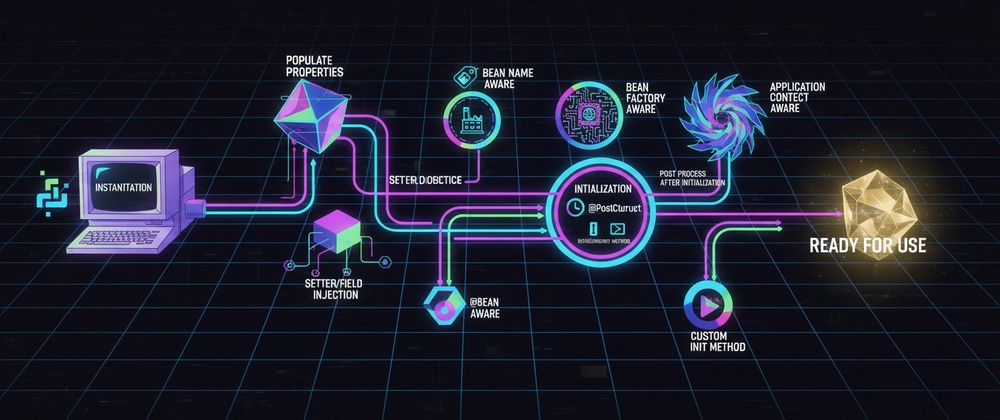
Imagine planting a seed in your garden. You don't just throw it in the soil and expect magic. You prepare the ground, water it, nuture it, watch it grow, and eventually remove it when its purpose is fullfilled. Surprisingly, Spring works in a very similar way. Every object that Spring manages goes through its own controlled journey from creation to destruction. This is called the Spring Bean lifecycle.

[Writing Practice]: Spring Data JPA Best Practices: Transactions and Manual Queries

· 17 min read
Link Nuis
Java Developer
warning

This blogs solely for writing practice, so it's primarily a copy blog/article, not intended for content dissemination.

Root blog/article: link-blog

Manual and automatic transaction management

Imagine you need custom logic to work with your database, such as managing transactions, but Spring Data JPA repositories are insufficient for you. So what could you do? Spring Data JPA offers various approaches to achieve this.